
Why Is Tennis the Healthiest Sport?
What if one simple activity could help you live longer, feel stronger, think more clearly, and have more fun at any age?
There is one simple activity. And that activity is tennis.
You don’t need to be an athlete. You don’t need to keep score. You don’t even need to play often to experience the benefits. Whether you’re chasing your first rally or looking for a healthy hobby that fits into a busy life, tennis shows up again and again as one of the best things you can do for your body and mind.
In this blog, we’re breaking down what makes tennis so good for you—from physical fitness to mental clarity, from childhood to adulthood—and why it’s never too late (or too early) to get started.
Ready to find out why tennis might be the healthiest sport in the world? Let’s go.
Is Tennis the Healthiest Sport in the World?
It’s a bold claim, but the research backs it up.
A landmark study published in the British Journal of Sports Medicine followed over 80,000 adults for up to nine years and found that racket sports like tennis were linked to 47% lower risk of death from any cause, including cardiovascular disease. That’s a greater reduction in mortality than running, cycling, swimming, or gym workouts alone.
Another long-term study from Denmark looked specifically at how different types of physical activity impacted lifespan. It found that tennis players lived an average of 9.7 years longer than people who were sedentary, more than any other sport examined, including jogging, swimming, and cycling.
So why does tennis rank so high?
Researchers believe it’s the combination of physical intensity, mental engagement, and social interaction. While many sports focus on just one of these, tennis gives you the trifecta: a cardio workout, a cognitive challenge, and a community.
What Are the Health Benefits of Tennis?
Tennis is more than just a workout. It’s a full-body, full-mind experience. Unlike repetitive gym routines or solo exercises, tennis keeps you engaged on multiple levels, which is one reason it stands out in health studies.
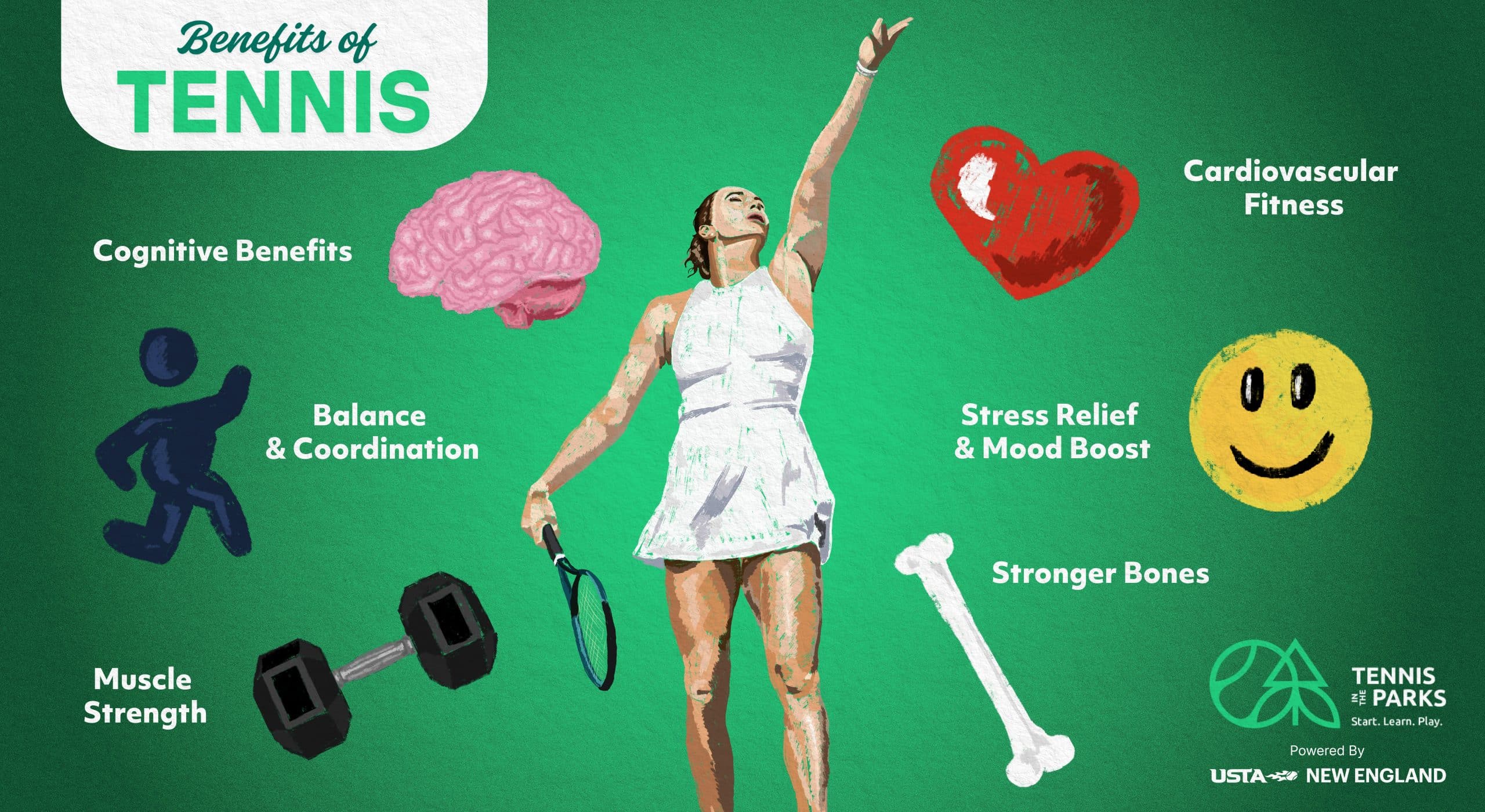
Here are the major benefits tennis offers:
1. Cardiovascular Fitness
Tennis involves short bursts of high-intensity movement, like sprinting, stopping, and changing direction, all of which improve heart health. Over time, this kind of activity strengthens your cardiovascular system and helps regulate blood pressure and cholesterol. The American Heart Association recommends moderate to vigorous aerobic activity like tennis to reduce the risk of heart disease and stroke.
2. Muscle Strength and Endurance
Every time you serve, volley, or sprint across the court, you’re building strength in your legs, core, arms, and back. It’s a form of resistance training that doesn’t feel like traditional weightlifting, but works just as well.
3. Stronger Bones
Tennis is a weight-bearing sport, meaning your bones work against gravity to stay strong. This kind of activity increases bone density and reduces your risk of osteoporosis, especially as you age. According to the NIH, weight-bearing activities are essential for long-term bone health.
4. Better Balance and Coordination
Quick footwork, tracking the ball, and adjusting your stance in real time all enhance your balance and coordination. This benefit is especially important for older adults, as it helps prevent falls and maintains independence.
5. Cognitive Benefits
Tennis is a mental game as much as a physical one. It requires split-second decision-making, strategic thinking, and constant problem-solving—all of which keep your brain sharp. Regular participation in mentally stimulating activities like tennis may even help delay cognitive decline, according to research from the Alzheimer’s Association.
6. Stress Relief and Mood Boost
Physical movement releases endorphins (your brain’s natural mood boosters), and playing with others adds a social connection that can lower stress and improve mental health. A study from the University of Oxford found that social sports like tennis may be more effective at reducing depression and anxiety than solo workouts.
Is Tennis a Good Exercise for Beginners?
Absolutely! And that’s one of the best things about it.
You don’t need prior experience, a perfect serve, or a gym membership to start playing tennis. It’s one of the most beginner-friendly sports out there, with modified formats and flexible options for every age and ability.
Start Slow, Move More
Tennis can be played at your own pace. You can rally casually with a friend, take a beginner group class, or join a local “Learn to Play Tennis” program. Many communities offer low-cost or free lessons through parks and rec departments, making it easy to try without a big commitment.
Modified Equipment Makes It Easier
New to the game? Some organizations offer programs that use smaller courts, lower nets, and slower balls (Red, Orange and Green before Yellow) to help beginners ease into the sport. These adjustments make it easier to rally, learn technique, and build confidence without getting frustrated.
Low Barrier to Entry
All you really need is a racket, some sneakers, and a place to play. Public courts are free in many towns, and community-based programs often provide equipment for newcomers. We have a partnership with Tennis Warehouse, your one-stop shop for all tennis equipment needs. Check it out here.
Encouragement Without Intensity
Unlike many sports that revolve around competition or athleticism, recreational tennis focuses on fun, movement, and learning. It’s a welcoming environment where people of all ages—kids, adults, and older adults—can feel comfortable.
Ultimately, tennis is a great entry point for people who want to get active, improve their health, and enjoy the process along the way.
Do You Have to Play Tennis Competitively to Benefit?
Not at all.
One of the most encouraging things about tennis is that you don’t need to keep score, compete in tournaments, or even play full matches to experience its health benefits. Recreational tennis still provides powerful physical and mental perks.
Movement Is What Matters
Even a relaxed session of hitting balls back and forth boosts your heart rate, improves coordination, and builds muscle strength. According to the Centers for Disease Control and Prevention, any moderate-intensity physical activity that gets you moving for 150 minutes a week is enough to lower your risk for chronic disease—and tennis definitely qualifies.
Casual Play Still Counts
Activities like:
- Practicing your serve
- Playing doubles at the park
- Attending a beginner clinic
- Rallying with your kids
Each of these contributes to better health without necessarily feeling like a “workout.”
Less Pressure, More Consistency
When you take away the pressure to “win” or “train,” tennis becomes more enjoyable and that means you’re more likely to stick with it. Consistency is the key to lasting health benefits, and playing just once or twice a week can make a meaningful difference over time.
The takeaway: You don’t need to play hard, fast, or frequently to make tennis a valuable part of your wellness routine.
A Lifetime of Health, One Swing at a Time
Tennis isn’t just a pastime, but a powerful, proven way to support your health at every stage of life. Whether you’re five or seventy-five, new to exercise or a lifelong athlete, tennis offers something few sports can: a full-body workout, mental stimulation, social connection, and fun, all in one!
And here’s the best part: you don’t need to compete, play often, or be a highly competitive player to benefit. Just showing up, moving your body, and having a good time is enough to improve your heart health, strengthen your muscles and bones, sharpen your mind, and even extend your life.
So if you’ve been looking for a reason to pick up a racket, this is it!
FAQs About Tennis and Health
What age is best to start playing tennis?
Most kids can begin around age 5 with modified programs. That said, it’s never too late to start, and adults of all ages can benefit from starting tennis at any point in life.
Is tennis good exercise for older adults?
Yes. Doubles tennis, in particular, provides low-impact movement that supports heart health, coordination, and mental acuity without being too strenuous.
Can tennis help with weight loss?
Playing tennis can burn between 400 to 600 calories per hour, depending on intensity and whether you’re playing singles or doubles. Consistent play supports healthy weight management.
Do I need expensive equipment to start playing tennis?
Not at all. Many community courts are free to use, and beginner programs often provide rackets. All you really need are non-marking sneakers and a willingness to try.
How often should I play tennis to see health benefits?
Just 1–2 sessions per week can improve cardiovascular fitness, muscle tone, mental health, and more. You don’t need to play every day to make it count.

